


How to Layer Necklaces: Lengths, Combinations and No Tangles
• 6 min read
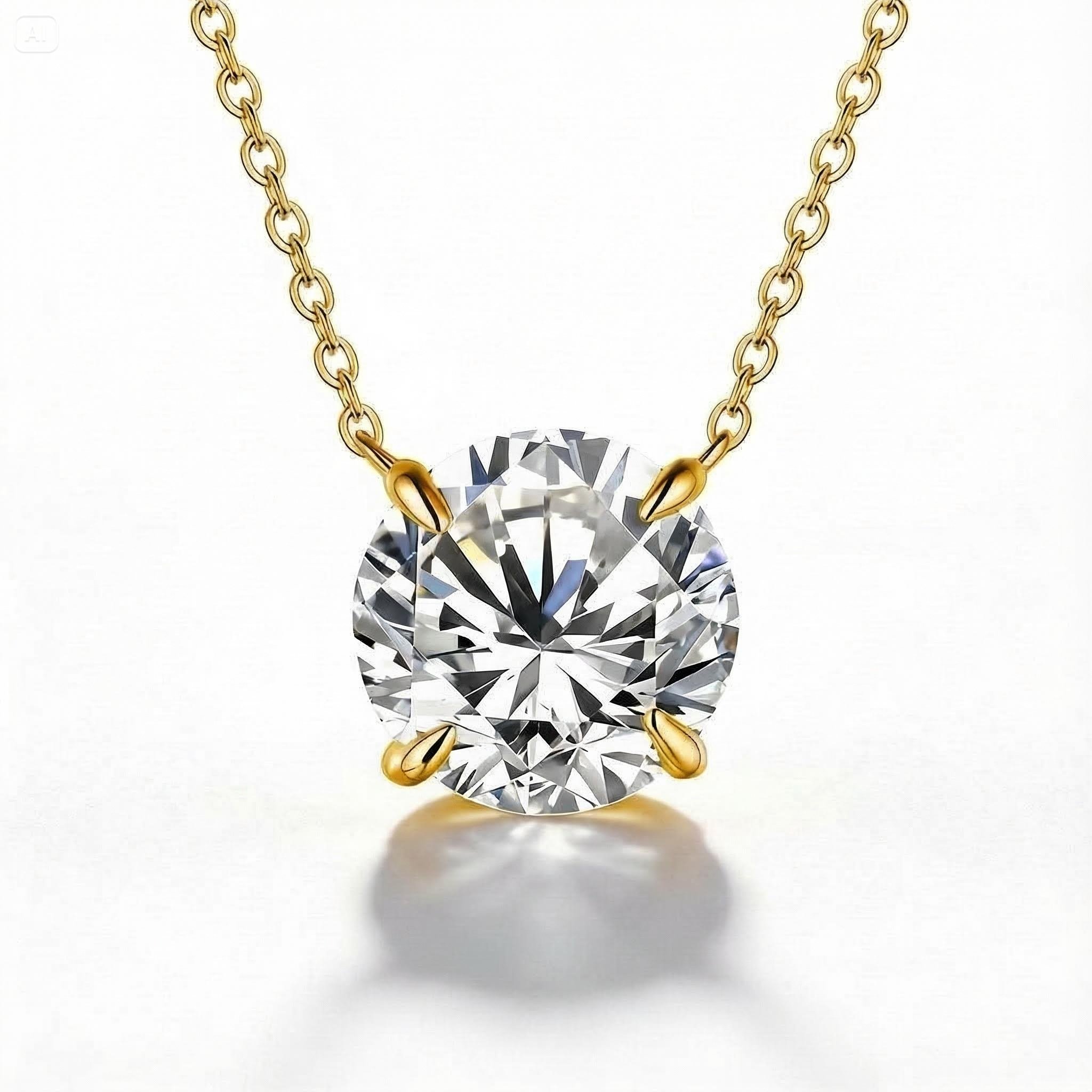
To layer necklaces well, choose pieces at different lengths, roughly 2 inches (about 5 cm) apart, so each one sits on its own line. Start with two or three, mix textures (a sparkling tennis necklace, a pendant, a fine chain), and let one piece be the star. Keep one metal tone dominant, or repeat each tone so the mix looks intentional.
That's the short version. Here's how to choose lengths, what pairs well, and how to keep it all from tangling.
Necklace lengths, explained
Necklace length names are common terms, not strict standards, and brands measure slightly differently. These ranges are widely used:
| Name | Length (inches) | Length (cm, approx.) | Where it sits |
|---|---|---|---|
| Collar | 12–14 | 30–35 | Tight around the middle of the neck |
| Choker | 14–16 | 35–41 | At the base of the neck |
| Princess | 17–19 | 43–48 | On or just below the collarbone |
| Matinee | 20–24 | 51–61 | Above the bust, on the chest |
| Opera | 28–36 | 71–91 | At or below the bust |
| Rope | 36 and longer | 91 and longer | Long; can be doubled |
The 18-inch princess length is the classic "one necklace" length. For layering, most people work within the 16 to 22 inch range.
How your neckline and build change things
The same length can fall differently from person to person, depending on neck size, shoulders and build. Before you buy, it helps to take a necklace you already own, measure it end to end, and see where it sits on you. Necklines matter too:
- Crew necks and high collars: shorter layers that sit above the fabric, or longer layers that fall over it.
- V-necks: V-shaped and pendant layers follow the line beautifully.
- Open collars and strapless styles: the most room for a full three-layer stack.
The basic formulas
Two layers
A simple pairing of one shorter and one longer piece. Try a 16-inch with an 18-inch, or an 18-inch with a 20-inch. Give the two pieces different characters: one sparkling, one simple.
Three layers
The classic stack is 16, 18 and 20 inches (about 41, 46 and 51 cm). Put the finest piece at the top, a focal piece in the middle or at the bottom, and keep spacing even.
The anchor rule
Choose one piece to be the star, often the pendant or the most sparkling piece, and let the others support it. When every layer is a statement, the stack feels crowded.
Mixing a pendant, a tennis necklace and a chain
This combination is the most versatile way to layer moissanite.
1. The tennis necklace, shortest
A tennis necklace is a continuous line of stones, and it looks best close to the collarbone, around 15 to 16 inches. Our Classic Tennis Necklace comes in lengths from 15 to 24 inches and stone sizes from 2.5 to 5 mm. For layering, a smaller stone size is easier to pair; save the larger stones for wearing alone. Our tennis necklace guide explains stone sizes in more detail.
2. The pendant, a little lower
A single stone on a fine chain is the natural second layer. The Solitaire Icon Necklace shown above, or the Timeless Round-Cut Necklace, sit nicely beneath a tennis line. For a softer, more romantic look, try the Furman Bloom Necklace or the pear-shaped Fortuna Pear-Cut Necklace. Check each listing for chain length so you know where it will fall.
3. A symbolic or chain layer, longest
Add a third layer with a different shape. The Lucky Love Clover Necklace, on a 45 cm chain, is an easy addition with a little story behind it: its pendant closes into a clover and opens into four hearts. Check the chain length of your pendant so this layer falls below it.
A V-shaped option
The Radiant Cascade V Tennis Necklace, with stones graduating from 3 to 5 mm, naturally draws the eye downward. It pairs well with a single fine chain rather than a pendant, so the V stays the focus.
Layering for different occasions
Everyday
Keep it light: two fine pieces, such as a small pendant over a simple short chain. Pieces you'll wear daily should be comfortable enough to forget you have them on. Small stones and fine chains are ideal, and they're easy to keep clean.
Work
A polished, quiet stack works well with collared shirts and knitwear: a short tennis necklace with a small stone size, or a single solitaire pendant paired with one other fine piece. Avoid long, swinging layers if you spend the day at a desk or a keyboard.
Evening
This is where you can turn things up. Wear a larger-stone tennis necklace close to the neck, let a pendant fall a couple of inches below, and keep earrings simple so the neckline stays the focus. A graduated design like the Graduated Brilliance Tennis Necklace can carry an evening look on its own, with nothing else needed.
Mixing metals
Mixing yellow, white and rose gold tones can look rich and relaxed, as long as it looks deliberate. A few ways to get there:
- Repeat each tone. If you wear one yellow gold piece, add a second somewhere, in your stack, your earrings or your rings.
- Choose a dominant tone. Let one metal lead and use the other as an accent.
- Match the weight and style. Fine pieces of different metals blend more easily than one heavy and one delicate piece.
- Let sparkle bridge the gap. Colorless moissanite works with any metal tone, so stone-set pieces help a mixed-metal stack feel unified.
Most of our necklaces come in more than one finish. The Solitaire Icon Necklace, for example, is offered in white, yellow and rose gold plating, so you can build a matched stack or mix on purpose. All are 925 sterling silver with plating, not solid gold, and our guide to gold-plated sterling silver explains how plating wears over time.
How to avoid tangles
Tangling is the most common frustration with layered necklaces. These habits help:
- Vary the weight. Include at least one heavier piece, such as a tennis necklace or a larger pendant. Heavier pieces sit still and act as an anchor, and lighter chains tangle less around them than around each other.
- Keep your spacing. About 2 inches between lengths gives each piece room. Pieces of almost the same length are the ones that twist together.
- Fasten one at a time. Put each necklace on separately and check that it falls freely before adding the next.
- Try a layering clasp. A multi-strand clasp or detangler holds several chains in order at the back.
- Take them off separately, too, and store each one on its own, clasp closed, ideally in a lined box or individual pouch.
- Mind the stones. Moissanite is very hard, so pieces rubbing together in a drawer can scratch metal. Storing separately protects the plating.
Caring for a layered stack
More pieces worn together means more contact between them, so a little extra care goes a long way. Put necklaces on after perfume and lotion have dried, take them off for showers, swimming and the gym, and wash them gently with warm water and mild soap when they look dull. Our guide on how to clean moissanite covers the full routine.
Layering as a gift
Layering pieces make easy gifts, because they don't need a ring size and they work with what she already owns. A single pendant she can add to her stack is a thoughtful choice. See our moissanite jewelry gift guide for more ideas, and our post on styling moissanite for everyday outfit inspiration.
Start your stack
The best stacks are built over time, one piece at a time. Browse all of our moissanite necklaces, from fine pendants to tennis lines, or look through Everyday Sparkle for dainty pieces made to layer.
Frequently asked questions
What lengths should I use to layer necklaces?+
A popular starting point is a three-layer stack around 16, 18 and 20 inches (roughly 41, 46 and 51 cm). Keeping about 2 inches between layers lets each piece sit on its own line. If you're layering two pieces, try 16 and 18 inches, or 18 and 20 inches for a lower look.
How many necklaces should I layer?+
Two or three is the easiest place to start. Two gives a clean, simple contrast, and three adds depth without feeling busy. Beyond that, keep the extra pieces fine so the stack stays balanced.
Can you mix gold and silver necklaces when layering?+
Yes. Mixed metals look intentional when each tone appears more than once, or when the pieces share a similar style or weight. Keeping one tone dominant and using the other as an accent is an easy way to make it work.
How do I stop layered necklaces from tangling?+
Use pieces of different weights and lengths, space the lengths about 2 inches apart, and let a heavier piece such as a tennis necklace anchor the stack. Fasten each necklace separately, and store them individually with clasps closed. A layering clasp or detangler can also help keep chains in order.
Can I layer a tennis necklace with a pendant?+
Yes, and it's one of the most elegant combinations. Wear the tennis necklace shorter, close to the collarbone, and let the pendant sit a couple of inches lower so the two don't compete. Keep the pendant simple so the tennis line stays the focus.
Related guides
Latest News
November 2, 2026
November 2, 2026
November 2, 2026
November 2, 2026
November 2, 2026