


How to Measure Ring Size at Home (With a US Size Chart in mm)
• 6 min read
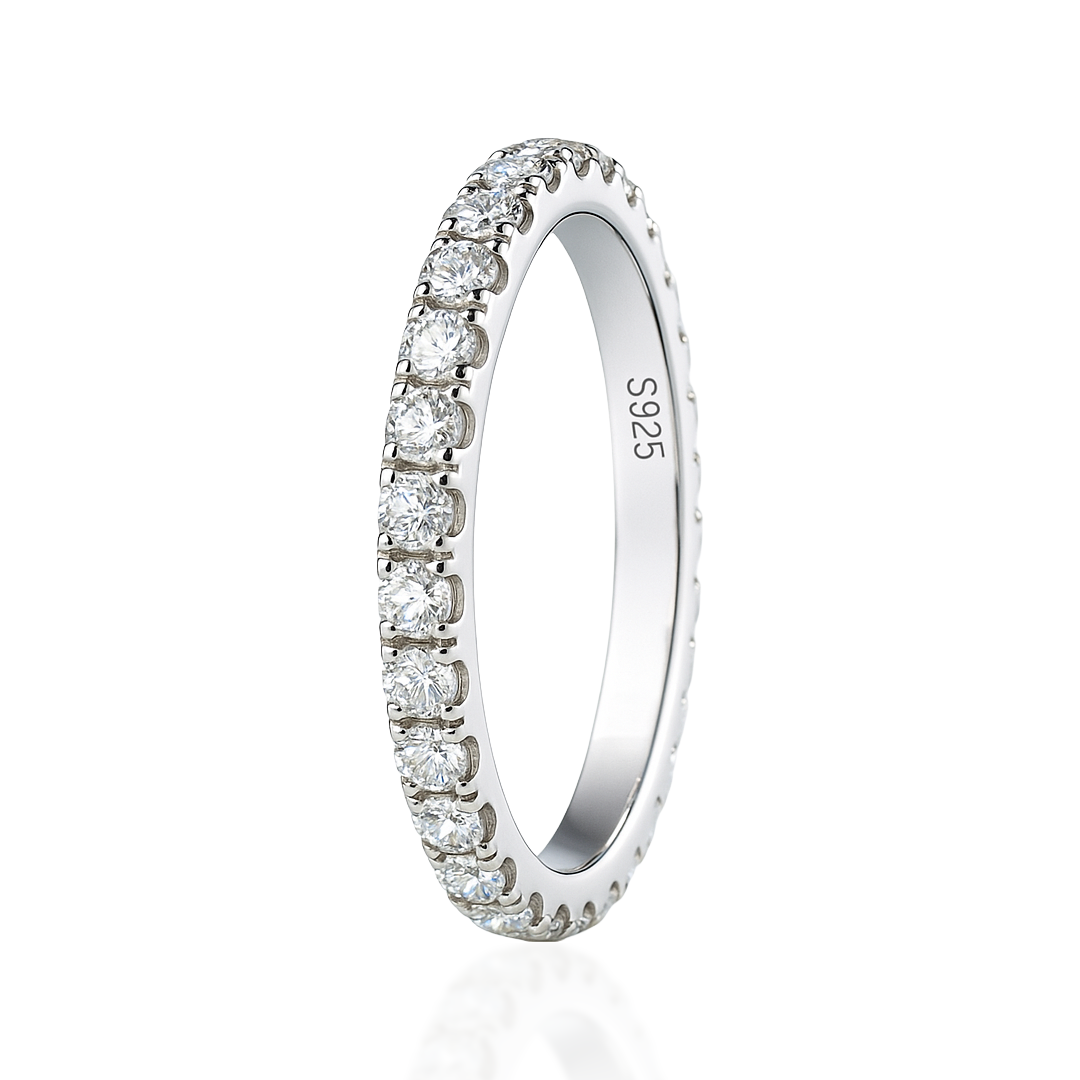
To measure your ring size at home, wrap a thin strip of paper around the base of your finger, mark where it overlaps, and measure that length in millimeters: that's your finger's circumference. Or, even better, measure the inside diameter of a ring that already fits that finger well. Then match either number to a US ring size chart, like the one below.
It sounds simple, and it is, but a few small details (temperature, knuckles, band width) can move you half a size. Here's how to get a measurement you can trust.
Before you start: five things that change your size
Fingers aren't fixed. The same finger can measure differently from morning to night. Keep these in mind:
- Time of day. Fingers tend to be slightly larger later in the day. Measuring in the evening helps avoid a ring that feels tight at night.
- Temperature. Cold fingers are smaller and warm fingers are larger. Don't measure right after being outside in the cold or right after a hot shower or workout.
- Which hand. Fingers on your dominant hand are often slightly larger. Measure the exact finger, on the exact hand, where you'll wear the ring.
- Your knuckle. The ring has to slide over your knuckle and then sit comfortably at the base. If your knuckle is noticeably wider than the base of your finger, choose a size that passes over the knuckle without forcing it.
- Band width. Wider bands feel tighter. Our size guide suggests considering going up half a size for bands wider than about 4 mm.
Measure three or four times, ideally on different days. If your results are consistent, you can trust them.
Method 1: measure a ring that already fits
This is the method our size guide calls the most accurate for home use, because you're measuring a real, rigid ring.
- Choose a ring that fits the same finger comfortably. A ring from another finger won't translate directly.
- Lay it flat on a table.
- With a ruler marked in millimeters, measure the inside diameter: straight across the widest point of the inner circle, from inside edge to inside edge. Don't include the metal.
- Match that number to the "Inner diameter" column in the chart below.
Tips: measure in two or three directions in case the ring has gone slightly oval over the years, and use the largest reading. A ruler with clear millimeter marks makes this easier, and a small caliper is even better if you have one.
Method 2: the paper strip (or string) method
If you don't have a ring that fits, measure your finger directly.
- Cut a strip of paper about 5 mm wide and 10 cm long. Paper is better than string because it doesn't stretch. If you do use string, choose one that isn't stretchy and keep it flat, not twisted.
- Wrap it snugly around the base of the finger. It should be firm but not tight.
- Mark the point where the end overlaps, with a fine pen.
- Check that the loop would slide over your knuckle. If it wouldn't, loosen it slightly and mark again.
- Unroll the strip and measure from the start to your mark in millimeters. That's your circumference.
- Match it to the "Circumference" column below.
A couple of millimeters of error equals roughly half a size, so take your time with the mark and the measurement.
A note on printable ring sizers and on-screen tools
Printable sizers can be handy, but they come with a catch: printers and PDF viewers often scale pages automatically, and even a few percent of scaling makes every circle the wrong size. If you use one, print at 100% or "actual size" and check the scale with a ruler before you trust it. Paper sizers can also flex as you push them over your knuckle.
On-screen ring sizers have the same problem, because screens display sizes differently. Treat both as a rough check, not your final answer, and confirm with one of the two methods above.
US ring size chart (sizes 4–10, inner diameter and circumference)
These values match the size chart shown on our product pages. Inner diameter is the distance across the inside of the ring; circumference is the distance around the inside. Other charts may round a tenth of a millimeter differently, which is normal.
| US size | Inner diameter (mm) | Circumference (mm) |
|---|---|---|
| 4 | 14.9 | 46.8 |
| 4.5 | 15.3 | 48.0 |
| 5 | 15.7 | 49.3 |
| 5.5 | 16.1 | 50.6 |
| 6 | 16.5 | 51.9 |
| 6.5 | 16.9 | 53.1 |
| 7 | 17.3 | 54.4 |
| 7.5 | 17.7 | 55.7 |
| 8 | 18.1 | 57.0 |
| 8.5 | 18.5 | 58.3 |
| 9 | 18.9 | 59.5 |
| 9.5 | 19.4 | 60.8 |
| 10 | 19.8 | 62.1 |
Each half size is a step of roughly 0.4 mm in diameter, or about 1.3 mm in circumference. That's why careful measuring matters.
If you land between two sizes
Choose the larger size. A ring that's very slightly loose is usually more comfortable than one that pinches, especially in warm weather or later in the day. Our size guide gives the same advice.
Which band styles fit differently?
Not every ring wears the same, even in the same size.
- Thin solitaire bands usually fit true to your measurement.
- Pavé and eternity bands, like the Eterna Moissanite Eternity Band or the heart-cut Infinite Love Band, have stones set into the band, which can make them feel a little snugger. Getting the size right matters even more here, because a full eternity band generally can't be resized the way a plain band can. Our eternity band guide explains why.
- Wider or heavier designs feel tighter and may call for half a size up.
Our ring sizes, and our sizing policy
Most of our rings come in US sizes 4 to 10, and many styles include half sizes, such as The Signature Ring. A few designs are made in whole sizes only (often 5 to 9), so check the size options on each product page before you order.
Please measure carefully before ordering. Our returns policy gives you 14 days from delivery to return eligible, unworn items in their original packaging, but it does not cover returns or exchanges for incorrect sizing. If you're unsure, two good options:
- Get professionally sized at a local jewelry store. It's quick, and it's the most reliable way to know your size.
- Ask us first. Email service@furmanluxury.com with your measurements and the ring you're considering, and we'll help you choose a size before you order.
Common mistakes to avoid
- Measuring a ring from a different finger and assuming it will match.
- Pulling the paper strip too tight, or letting string stretch.
- Measuring with cold hands first thing in the morning.
- Trusting a printable sizer without checking the print scale.
- Forgetting the knuckle.
- Measuring once and stopping there.
Shopping for someone else?
If the ring is a surprise, you can't exactly wrap a paper strip around her finger. Our guide on how to find out her ring size secretly covers borrowing a ring, tracing it, and what to do if you're still not sure. And if the ring is an engagement ring, our moissanite engagement ring guide walks through styles, stone sizes and settings.
Find the ring, then the fit
Once you know your size, the fun part begins. Browse our moissanite rings or, for proposals, the engagement ring collection. Each product page has the size guide built in, so you can double-check your measurement against the chart before you choose.
Frequently asked questions
What is the most accurate way to measure ring size at home?+
Measuring the inside diameter of a ring that already fits the same finger well is usually the most reliable home method, because it measures a real, rigid ring rather than a strip that can stretch or compress. Measure edge to edge across the widest inside point in millimeters and match it to a size chart. A professional sizing at a local jeweler is more accurate still.
Is the string method accurate for ring size?+
It can get you close, but string stretches and can be pulled tighter or looser without you noticing. A narrow strip of paper is better because it doesn't stretch. Measure several times, at different times of day, and if the results fall between two sizes, choose the larger one.
Should I size up for a wide band?+
Often, yes. Wider bands cover more of the finger and feel tighter than a thin band in the same size. Our size guide suggests considering going up half a size for bands wider than about 4 mm.
What ring sizes do Furman Luxury rings come in?+
Most of our rings come in US sizes 4 to 10, and many styles offer half sizes. Some designs come in whole sizes only, often 5 to 9, so check the size options on each product page before you order.
Can I return a ring if it's the wrong size?+
No. Our returns policy does not accept returns or exchanges for incorrect sizing, which is why we encourage careful measuring before you order. If you're unsure, get sized by a local jeweler or email service@furmanluxury.com for sizing advice before placing your order.
Related guides
Latest News
November 2, 2026
November 2, 2026
November 2, 2026
November 2, 2026
November 2, 2026